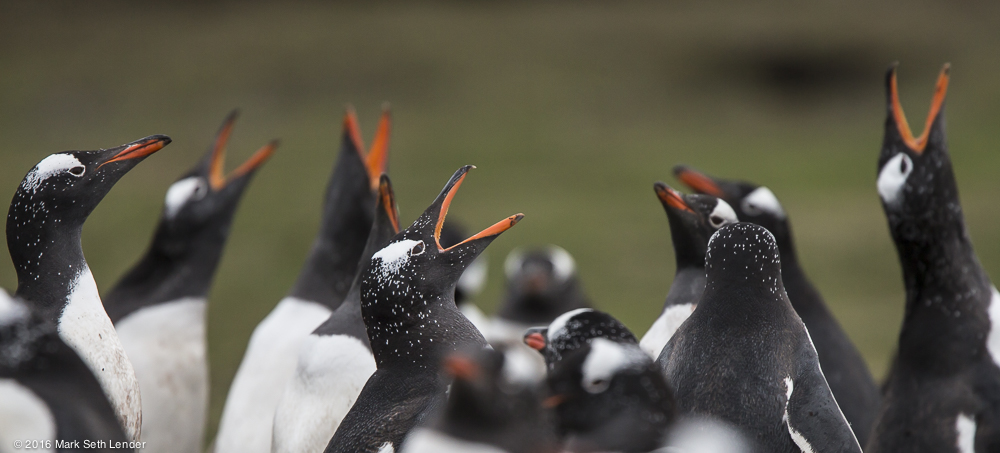
Stealing Dirt

Gentoo Colony,

Gentoo Colony

Stealing Dirt, my essay on Gentoo penguins, was nationally broadcast on PRI’s Living on Earth during the week of March 11 2016. You can  listen online at LOE.org.

Gentoo Penguin colonies are raucous and contentious and the ones on Carcass Island, in the West Falklands, are no exception. That continuous uproar gives them a bad name. “Temperamental,” people say. “Nasty.” Not true. Penguins are delightful and the reputation that precedes them is simply wrong. They are endlessly entertaining to watch, harmless to us and by and large to each other. The noise and the short tempers are primarily the product of crowding. This despite the thin human population of the Falklands, and the fastness and expanse of South Georgia, the South Shetlands and the many small islands off the Antarctic Peninsula as well as the Peninsula itself. Suitable nesting sites for penguins of any species are few and Climate Destabilization only makes it worse. A tabular iceberg grounded in front of one of the most important colonies of Adele penguins in 2011 (picture Central Park, 120 feet high and made of ice). The giant berg blocked the Adele’s route to the sea and 150,000 penguins starved. The berg came from the massive and continuing breakup of the Ross Ice Shelf, in turn a direct result of increasing temperatures. Pray for the penguins.

I spent 3 weeks in the Antarctic with One Ocean Expeditions. The Falkland Islands was our ship’s first port of call. One Ocean is the most conscientious tour group I’ve ever had. They were invaluable to me, and made equally certain every passenger saw and experienced every wildlife and landscape viewing opportunity. At the Gentoo colony on Carcass Island in the West Falklands, I watched the penguins building nests.  Penguins seem to have a well-developed sense of community and territoriality, but not the best sense of direction.  They deliberately trespass when collecting mud for their nests (hence the title “Stealing Dirt”)  – often getting away with it – and not so deliberately trespass when returning to their own turf. This they tend not to get away with.  In the banner photo above, a trespassing penguin gets the treatment from his immediate neighbors. In the photos following, you can get an idea of how the conflicts develop their extent, and the very definite limits to how much damage penguins are willing to do (no much).
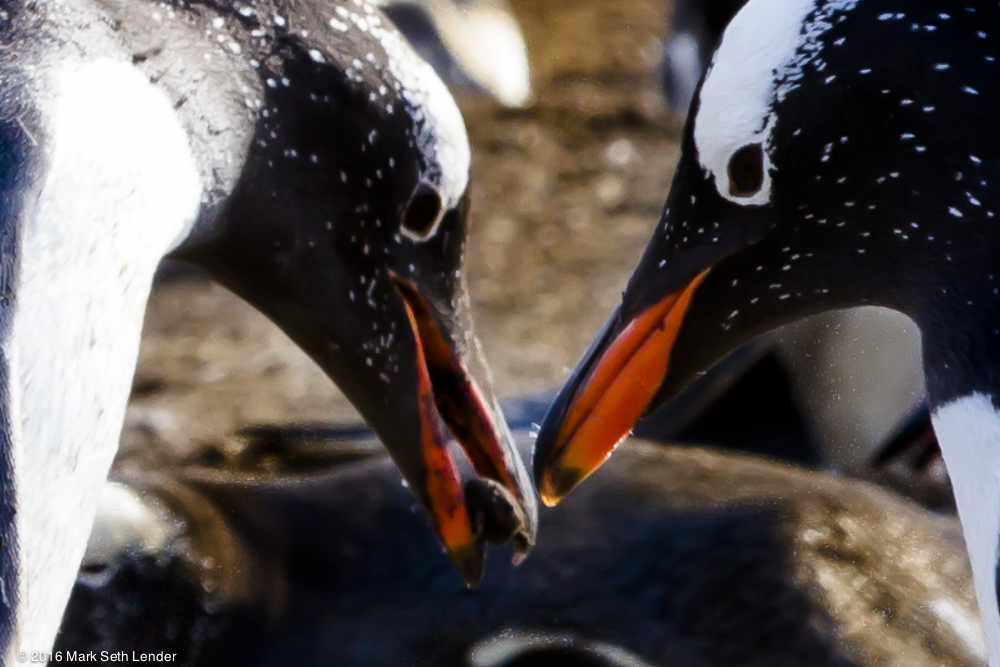
A Gift of Dirt is a Gift of Love

A Gift of Dirt is a Gift of Love

A male Gentoo crossed over from his own local group to a nearby group, and comes back with a pellet of mud for their mate.  She then adds it to the nest mound.  Sometimes it’s a little more complicated:
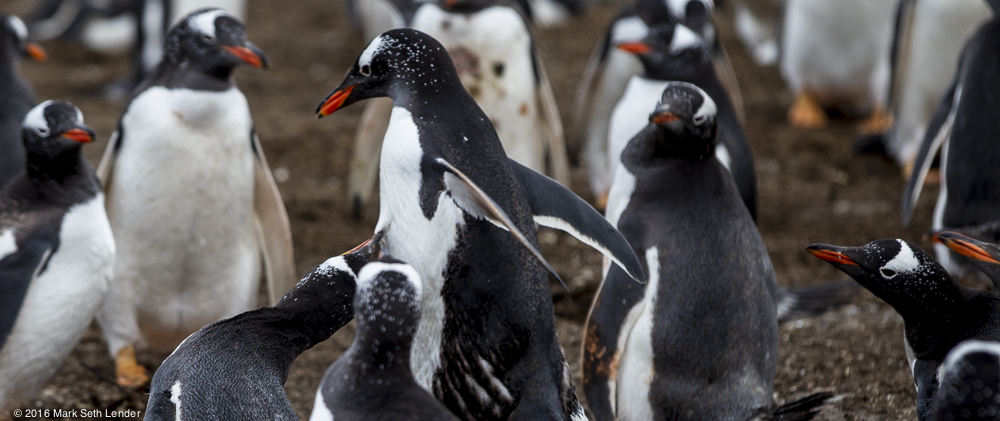
Back in his local group, he makes a wrong turn

Back in his local group, he makes a wrong turn and gets bitten!
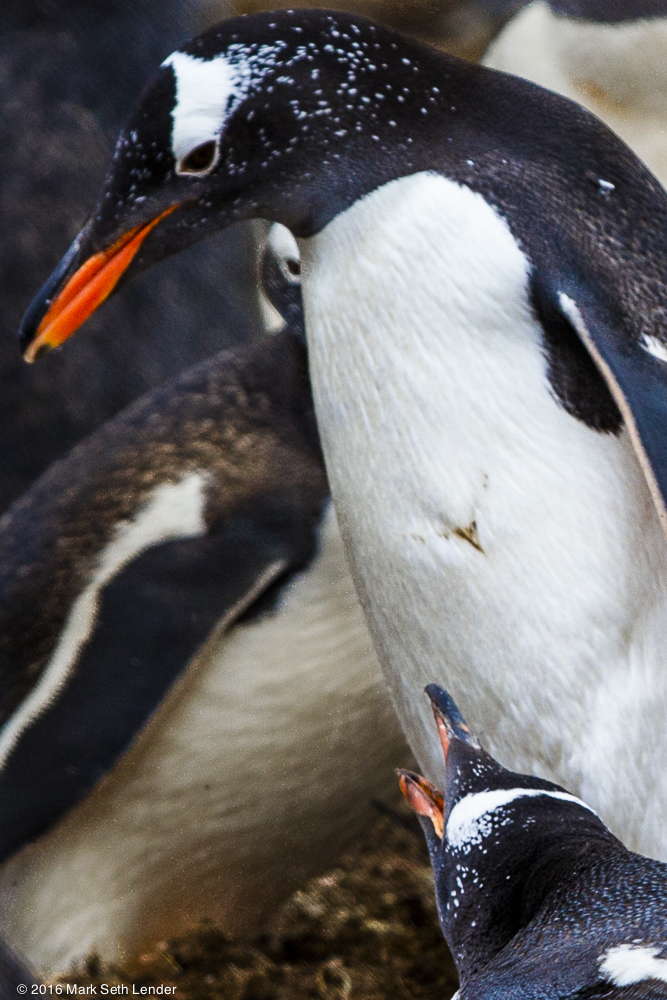
It's not much of a bite - just a mud spot on his feathers.

It’s not much of a bite – just a mud spot on his feathers.
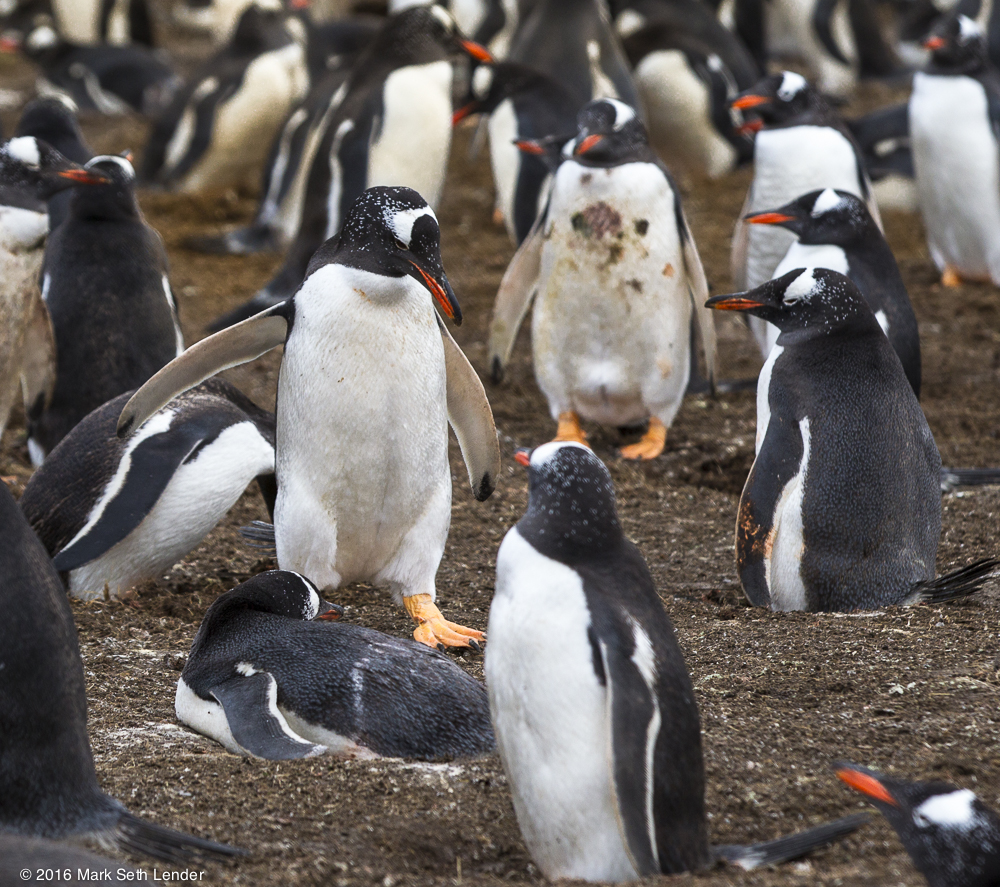
Finally, on the right street everyone notices him but no one minds his presence
Finally, on the right street everyone notices him but no one minds his presence

Gentoo Penguins Mating

Gentoo Penguins Mating

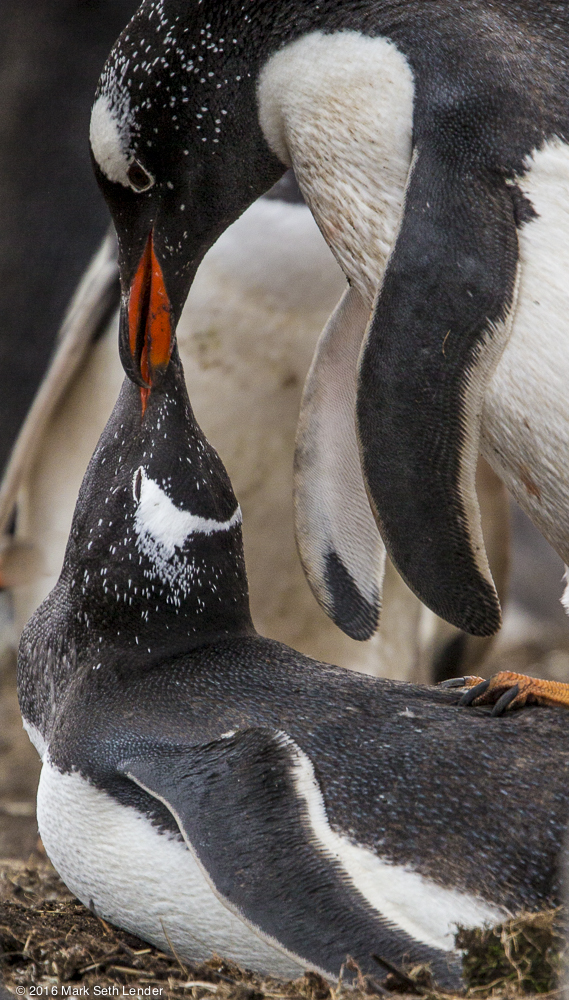
Penguins reward for all this effort is lovemaking.  And I say that deliberately.  Notice how the female reaches up to touch beaks with her mate.  What is this if not the kisses of love?

Thanks to One Ocean Expeditions (www.OneOceanExpeditions.com) , I was ably to spend many hours ashore and in kayaks, with plenty of quality penguin time. The Falklands alone were worth the trip. People are friendly, helpful, the birds close and plentiful (more about that in future columns), it is just a great place. When in Stanley in the East Falklands, be sure to grab lunch (and an Internet connection) at The Waterfront Hotel ( www.Waterfronthotel.co.fk ). For more information about visiting the Falklands, South Georgia and the Antarctic Peninsula send me an email. To see more photographs, follow me on Twitter, @marksethlender.
The Wages of Fear

BANNER - Cubs scrambleing after their mother-3076Two Cubs-of-the-Year scrambling after their Mother

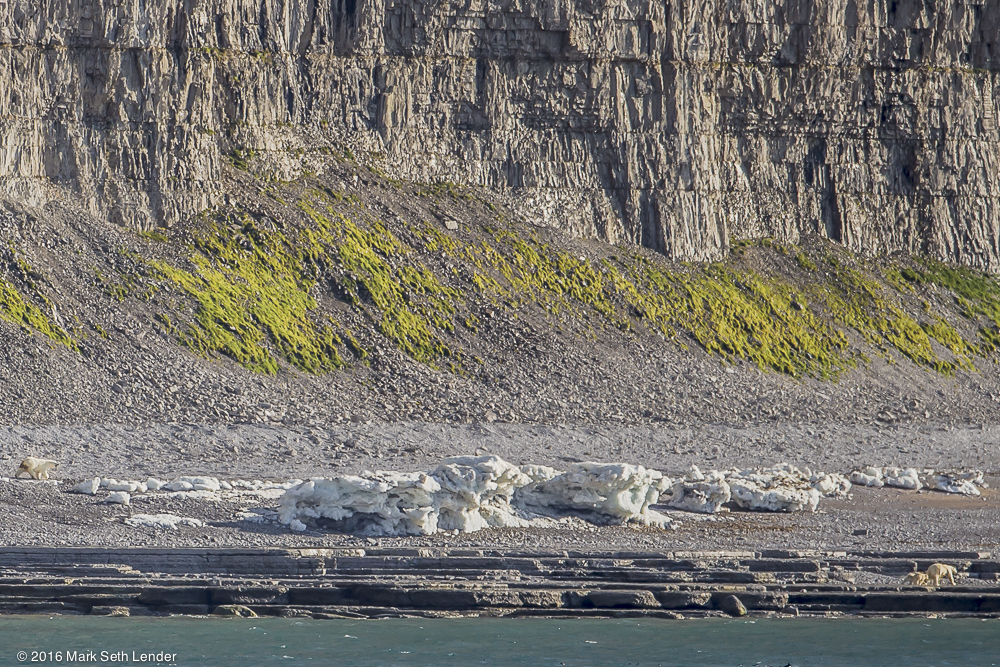
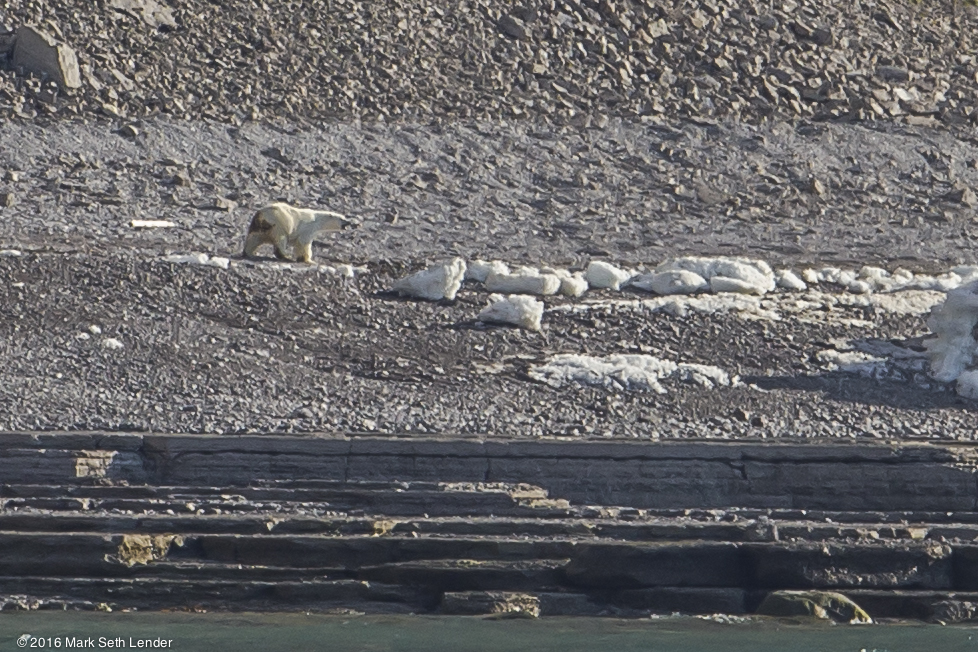
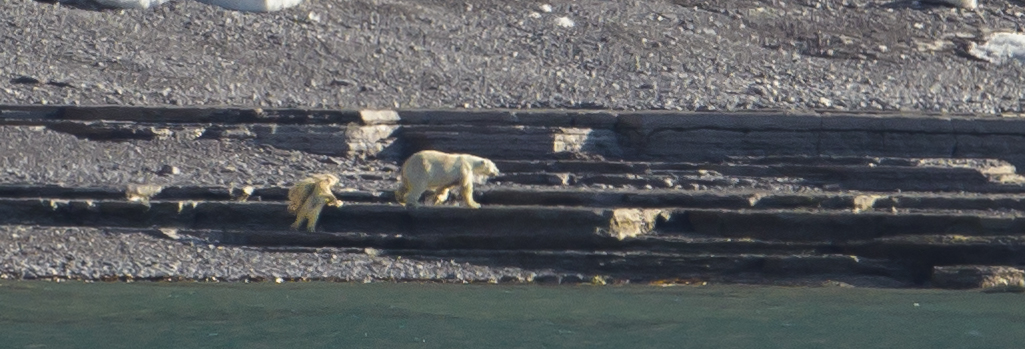
Akpatok is a closed island.  Landing is prohibited and approach by boat is restricted to a distance of 500 meters!  I was working from a Zodiac inflatable, which meant I did not have an entirely stable platform, and though I was shooting with a full sensor camera and and a 500 MM lens with a 1.4X extender on it (1.4 X 500 = 700 MM), a lot of it was guesswork.  By which I mean, I could see my targets – in this case the cubs and their mother – but had no idea what they were doing. And I was using the camera hand-held and braced against the gunnel of the boat – near impossible conditions.  Seconds after we sighted the mother and cubs moving down the beach, we spotted a large male polar bear off to the left.
 
Male Polar Bear ( middle left) Roaring at Fleeing Female and Cubs (lower right)-3120
Male Polar Bear ( middle left); Fleeing Female and her Cubs (lower right)
 
The reasonable assumption was that the female was not anxious to let him get too close, but in the instant, it was just an assumption. After a few minutes, with the pitch and yaw of the boat and the by now considerable distance, we lost sight of the mother and cubs.
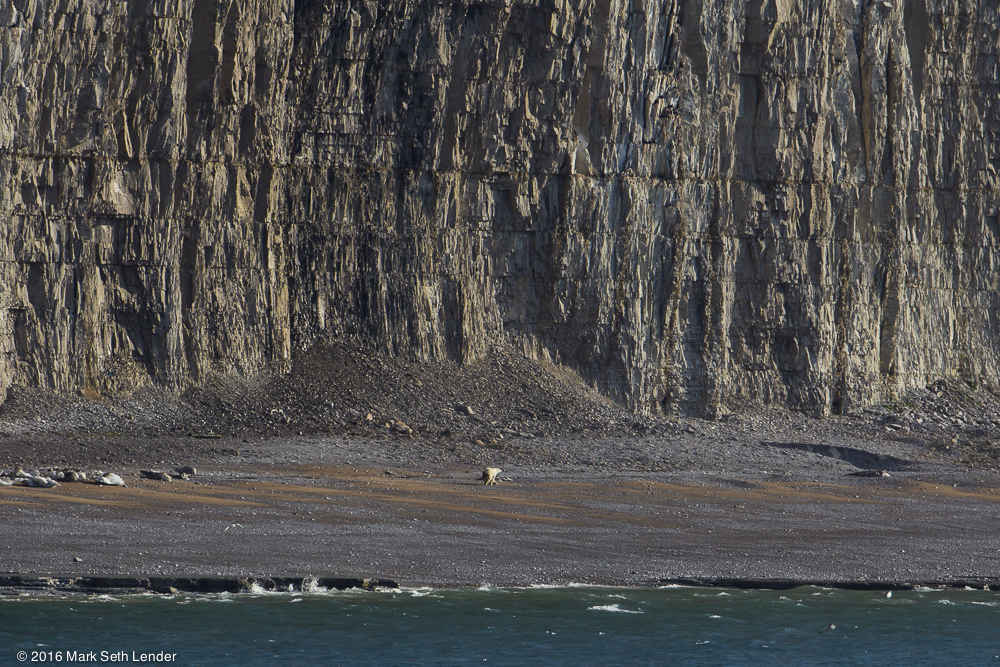
Aboard the main ship that evening, I ran through what I’d shot.  Which looked like a lot of nothing. It was not until several weeks later, at home and recovered from the trip, that I was able to revisit these frames. As it turned out, the male polar bear was much closer to the female and her cubs at the onset. She gained on him, then once again lost ground.  Throughout, he was periodically roaring – mouth wide open – for the space of several steps, i.e. striding and roaring.  However, he never left the upper part of the beach just below the cliffs.
 
Big male bear roaring!-3119
Male Polar Bear Roaring
 
The female was moving at a good clip, as evidenced by the fact that the cubs were scrambling to keep up with her. Then, rather suddenly, the male was alone on the beach, continuing on his way, and the female and cubs had vanished.
 Male Polar Bear Continues Along the Beach-3177
Male Polar Bear Continues on his Way
 
Eventually, I found the female. When the male polar bear had closed again to about 70 meters the female had plunged into the water.
 
The female dives into the water-3173
 Female Polar Bear Smashes into the Surf
 
But there was no sign of the cubs.
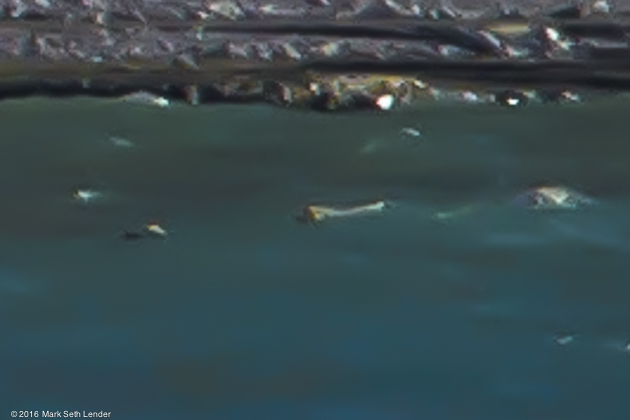
My cameras shoot at 10 to 14 frames a second.  There is always a certain amount of “blow-by” after the main action is captured and I began to review those frames. This meant searching no more than a few percent of the photo at a time. Pixels are visible at this magnification and I was looking more for light areas than resolvable forms. Whitecaps on the water added to the confusion.
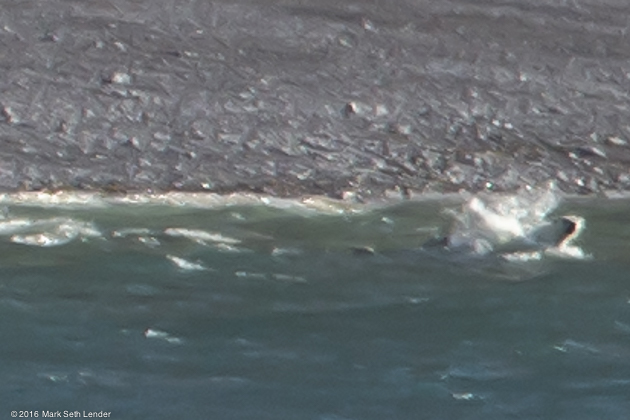
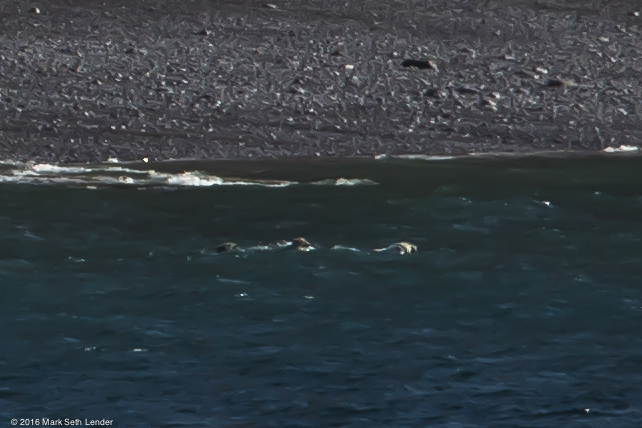
Finally, I found the cubs, not far from where the female made her plunge: one head, then two, swimming the wrong way.  There they were going with the current instead of against it, back towards the male. Multiplying the speed of the waves breaking on shore by the frame rate of the camera I was able to come up an estimate for the speed of the current:  better than 8 knots.
Now, the female had a choice to make. Continue on her way, or go back for her cubs?
Bear-on-bear combat is no different that bar handed combat between humans. Throw weight trumps agility. This is why boxers are restricted to their own weight class. If it came to actual physical contact the female would have been injured or killed outright.  This was why she was fleeing in the first place:  But, she went back for them.
 
Female turns back for the cubs-3177
Female (center right) Swimming Toward Cubs (two light areas parallel to her) [Note: The small black dots are the female’s nose and eyes thus indicating her direction]
 
Somehow she communicated to the cubs that they needed to turn around. In an instant they did an about face. She turned also, the cubs following her against the current, presumably toward safety.
 
Cubs following their mother against the current-3184
Cubs Following Their Mother
 
The camera lost sight of them after that, and as we saw, the male simply continued on his way never having descended toward the water.  But at their closest, the female and her cubs could not have been more than 20 meters from the male bear.
It could be that all that big male bear wanted was for the female and her cubs to take their competition elsewhere. As one often sees in the summer, his hind quarters were stained – bear diarrhea – the result of too much protein and not enough fat. Summer is a meager time for bears and they are mostly living on reserves and luck.  Akpatok is a (major) thick-billed murre nesting colony and he may have been catching birds, and the occasional egg. There is also the possibility of carrion washing ashore. When Inuit hunt beluga whales they strip only the fat and leave the what whalers called the “kreng” – a derogatory term for carcass – which is the bulk of the whale. It is a hugely wasteful practice occasioned, as one of my Inuit informants told me, by mercury in the meat. However, the toxic levels of PCB in the fat they ignore. The fat “tastes just like coconut.”  And as to the steady decline of the whales? As another informant told me with considerable annoyance, “There are plenty of whales.” The idea that this can continue is nonsense. The idea that half a ton of polar bear can survive in an ice-free arctic on birds and eggs and carcasses is at best, wishful thinking. It is fat bears need to survive the cold; fat that provides the reserves required for female polar beats to nurse their young; fat and a great deal of it that polar bears need in order to continue being polar bears.
But what you have is what you defend, and the male would have been unlikely to want to share the little he had. Hence, at least one motive for the chase.
That said, this was in July. The male bear may not have closed on the female and cubs because he wasn’t up to it. The Arctic in July is not Miami but it’s comparatively warm and the males great bulk may have prevented him from going any faster without exceeding the limits of his thermal regulation. A meal of bear cub is not outside the behavioral limits of a male polar bear though in the past, the primary motive in such cases was likely to force the female to breed again. Given current conditions, hunger might play a more significant role relative to sex, but a nursing polar bear is a determined and ferocious creature. Above all, it was that female bear doing a thing we expect from the best part of ourselves, that saved them.
My prose essays, including the one on this encounter, are broadcast nationally on Public Radio International’s Living on Earth. 
 
CREDITS:  My visit to Akpatok was made possible by the generous support of Adventure Canada www.AdventureCanada.com. Special thanks are due to Mather James Swan, who made every effort to get me the best vantage for my photos and the acquisition of this story.

Polar Bears of Akpatok Island, Hudson Strait

Akpatok Island, Hudson Strait

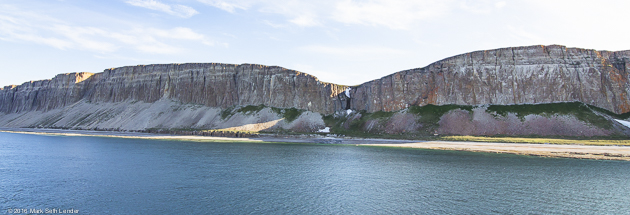
Akpatok Panorama-0120

Akpatok is a large island in Hudson Strait, Canada (approximately 60.2 N 68.4 W). I was there with Adventure Canada (www.adventurecanada.com) July 2015. There were polar bears on shore, drawn to the island by the large nesting colonies of thick-billed murre. Contrary to what you may have heard, neither the birds nor their eggs or chicks provide more than a snack to a polar bear, and at that, one that is hard to digest. Bears need fat. Fat comes from seals. To hunt seals bears need ice (they cannot match a seal’s speed or mobility in water). weight loss. No ice means no polar bears. Land foods will never make up the difference. Nevertheless, at a time of year when they are in the middle of their long summer fast, thick-billed murre are better than nothing and the polar bears appear in significant numbers.

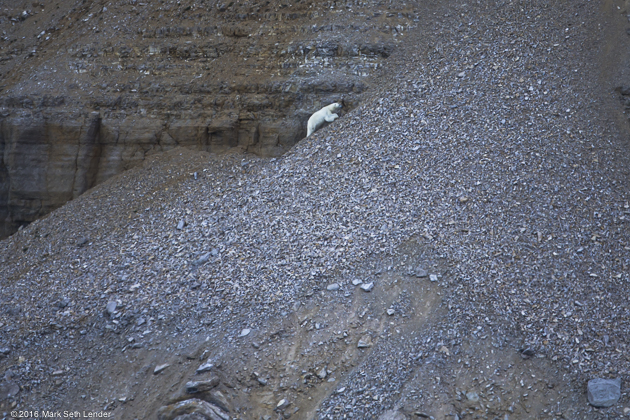
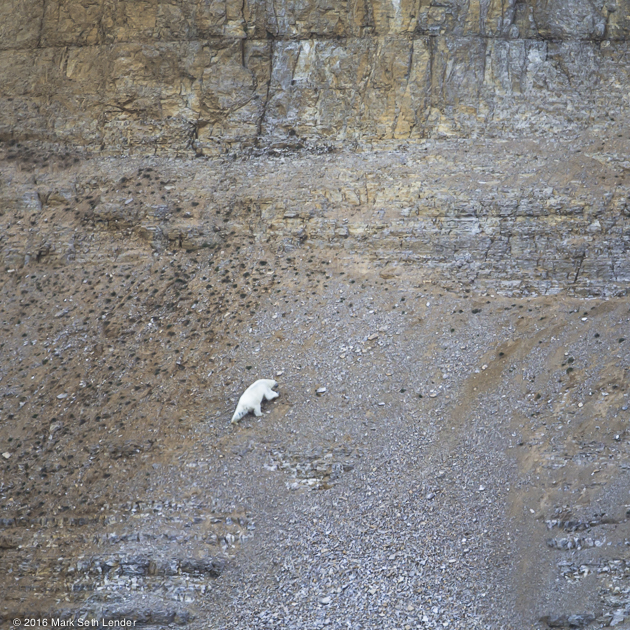
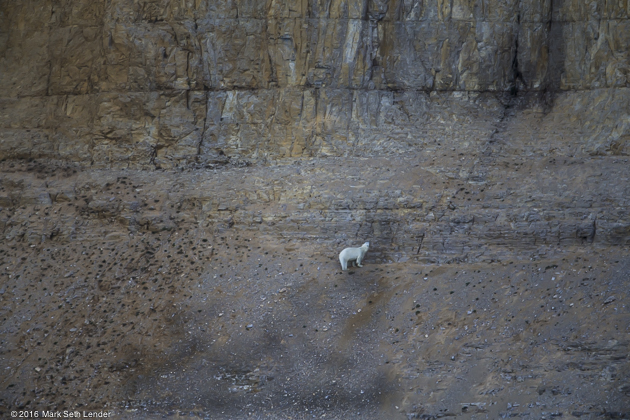
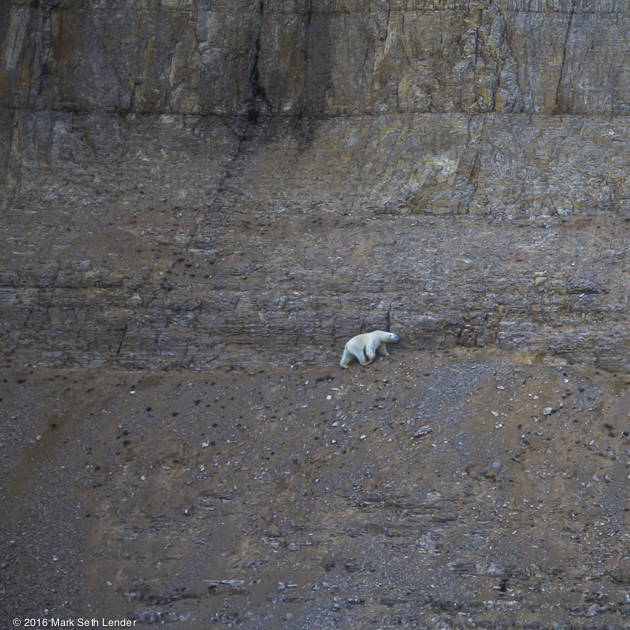
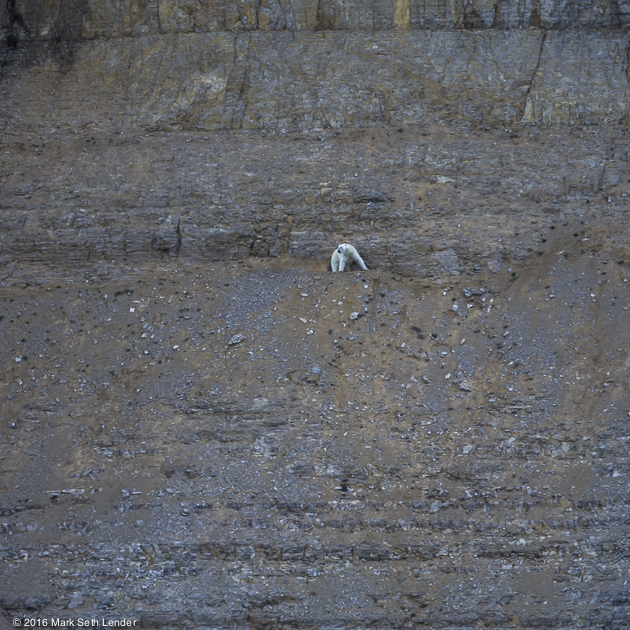
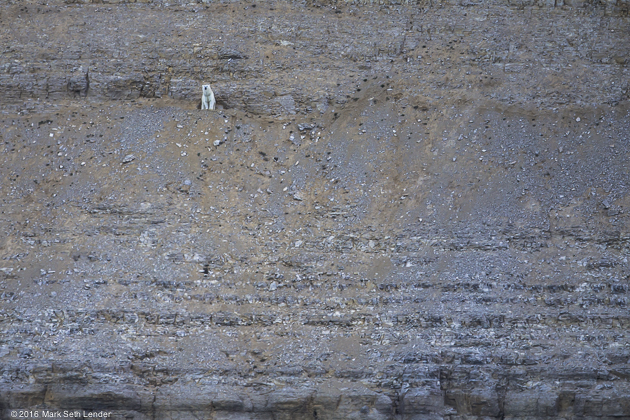
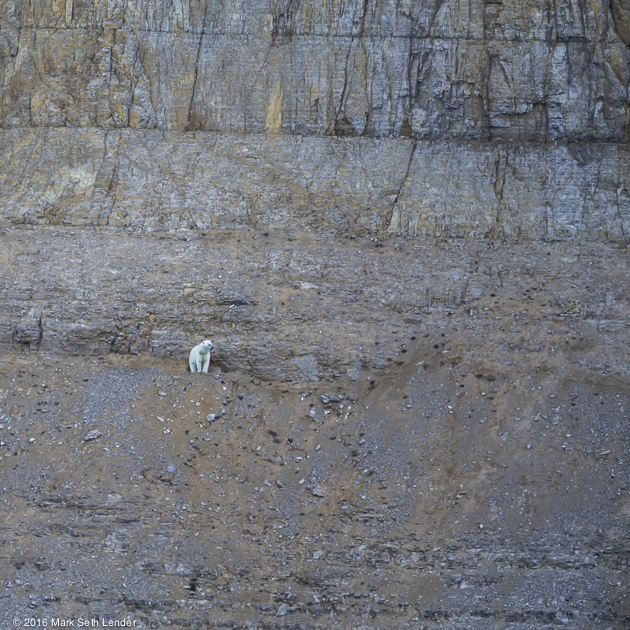
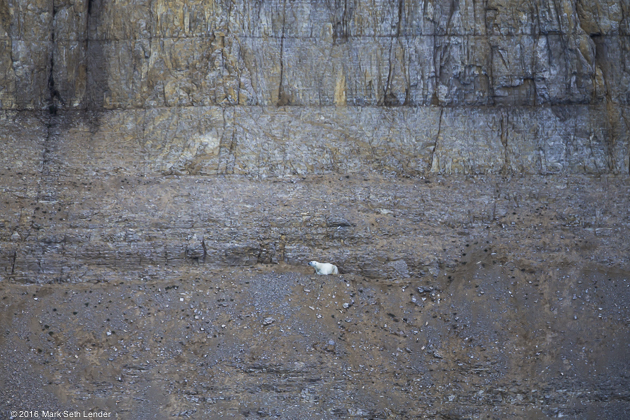
The most unusual polar bear/human interaction I’ve ever seen – and certainly the most amusing – is detailed in the photos below.  A big male bear climbed up the cliff to a great height, made himself comfortable, and then watched as a tourist plane flew right by him. I cannot say for certain this is what that polar bear climbed up to see, but there were no birds nesting anywhere near that part of the cliff, and as far as I can tell, other than the scheduled flight by Air Inuit, no reason to climb so high. Anyone who’s been around polar bears knows they are very smart. How smart?  No comment…

You can hear me read the essay I wrote about this particular polar bear encounter on Living on Earth, http://loe.org/shows/segments.html?programID=16-P13-00003&segmentID=6

Mark Seth Lender

Polar Bear Climbs the Talus Mound


Polar Bear Climbing the Talus Mound, 200'-3238


Higher still…

Higher still...-3307


Polar Bear at 400′ – Nothing there, and thinking, “Higher?”

400 feet -3352

And higher he goes!

And higher...-3396

HERE COMES THE PLANE!!

HERE COMES THE PLANE!-3483


THE PLANE!

The Rolls Royce engines hit the redline with a Roar, that even a polar bear can't match...-3476


THE PLANE!-3496


There goes the plane…

There goes the plane...-3497


And Polar Bear lies down.

And bear lies down.-3563


Hero

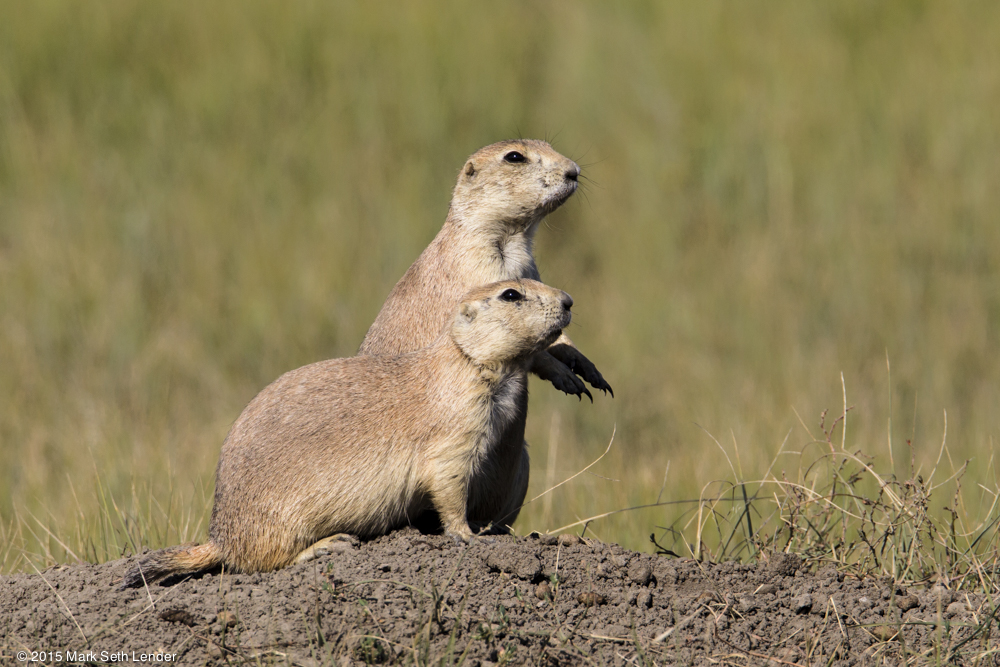
Prairie dogs are to the prairie what krill is to the ocean. Without them, that sea of grass is a dead zone. Mark Seth Lender visited a prairie dog colony in Grasslands National Park, Saskatchewan. What impressed him the most was not their value, but their bravery:
20130822_102951_2

Hero

Black-Tailed Prairie Dogs, Grasslands National Park, Saskatchewan
© 2015 Mark Seth Lender
All Rights Reserved

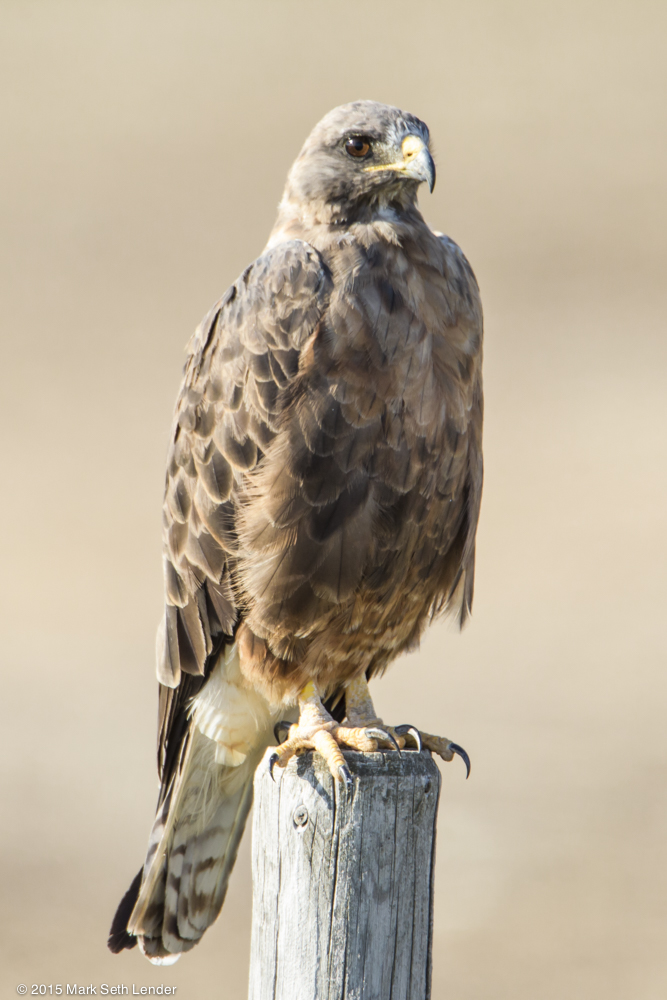
Dog on Guard does a jump-up bark, jump-up bark again. And all over Prairie Dog Town all the other dog guards jump-up back: below that ridge; up on the knoll; across, in the open, below the shadow of the mesa that rises like a wall. Must’ve seen some thing, some one. Got them started like the tattoo on a child’s tin drum. Could have been a hawk rolling on silent wing in the bright morning air. Could have been coyote, hungry enough, prowling the prairie on a daytime walk. Coulda been prairie rattlesnake sliding across the sunlit road with her rattle in the air. But our eyes are pretty much as good as any Dog of the Prairie, and I haven’t seen a thing round here. Perhaps they only jump-up bark to say: “I’m at my post, I am on guard, I’ve got your back.”

And the prairie dogs not on guard go about their business:

Dog, lying low.

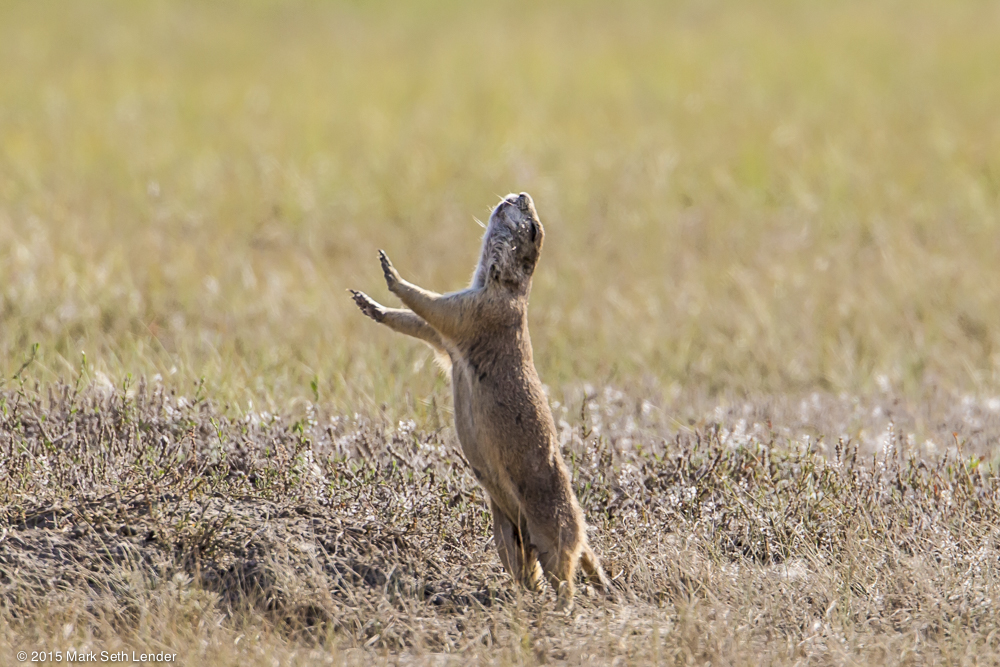
Three dogs standing up.

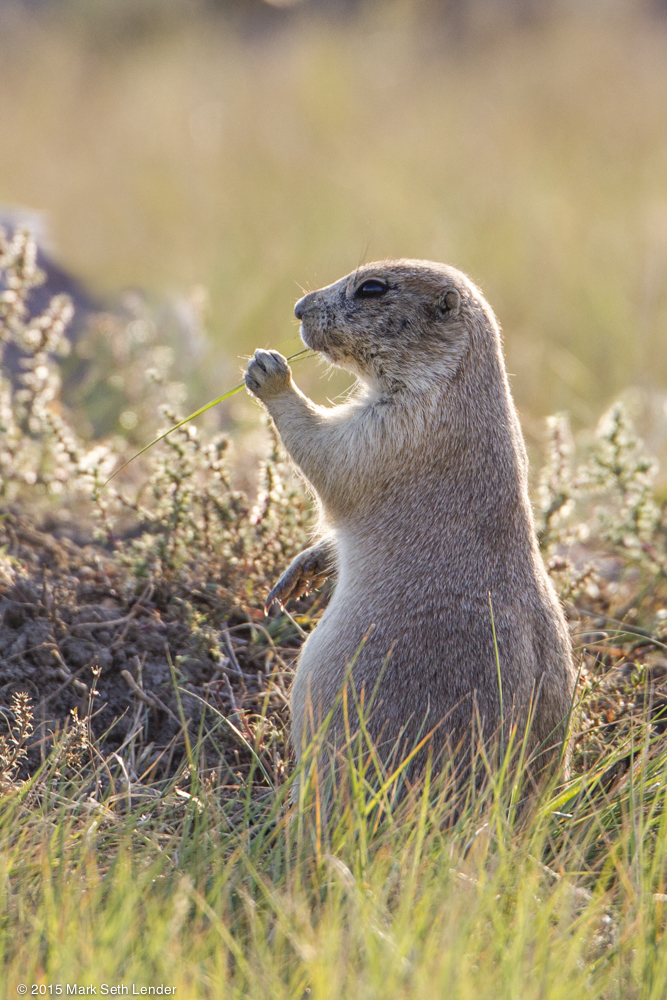
Dog chewing on a blade of grass like some old farmer.

Young dog all stretched out on the black earth to cool herself…

20130827_085735_6694

But now Dog on Guard crouches like a spring held in place by the thickness of a hair. And it’s jump-up bark nose in the air mouth in a howling shape. This time quite clear what he sees:

MAN!

COMES!

TOWARDS!

ME!

20130822_102125_2

Three nights ago badger came here on a raid. Tore the hell out of that mound over there like a steam shovel on a bad-drunk-day. Claw marks in the soft dry dirt, square and long and straight (and sharp as a cut nail rake). And, on the parched clay where water puddled in the rains (the cracked landscape laid out like tiles on some abandoned floor) there are skulls. A jawbone, incisors pointing up like tusks. A skeleton where a ferruginous hawk made a kill, bones laid out in perfect parallels

20130827_101805_6933

Prairie dog nightmares. And us, our kind, the very worst of them:

10 yards –

5 yards –

10 feet –

The closer I get the faster that guard dog barks, clipped and tight, the tone ascending:

White-tailed doe crosses the road at a run.

– Dog on Guard does not move.

Burrowing owl tucks out of sight.

– Dog on Guard just stares.

Big Bison Bull resting on his side, raises his great head, down in the arroyo way down there…

– Dog on Guard stands firm, until the last dog is safely underground all over Prairie Dog Town.

Red moon rising on the red prairie, full as a rising prairie sun. When day comes it all begins again: Dog on Guard. Just like the day before (and the day before that) if he survives the night.

Mark Seth Lender’s guide in Grasslands was Wes Olson. Support for Mark’s fieldwork was provided by Tourism Saskatchewan.

Mallardy

20101205_134907_0507

Mallardy
© 2015 Mark Seth Lender
All Rights Reserved

For the mallards who migrate and for those who stay behind, life is not easy. Much of the habitat on which they depend has been taken from them. Every year, I do what I can to make up for it.

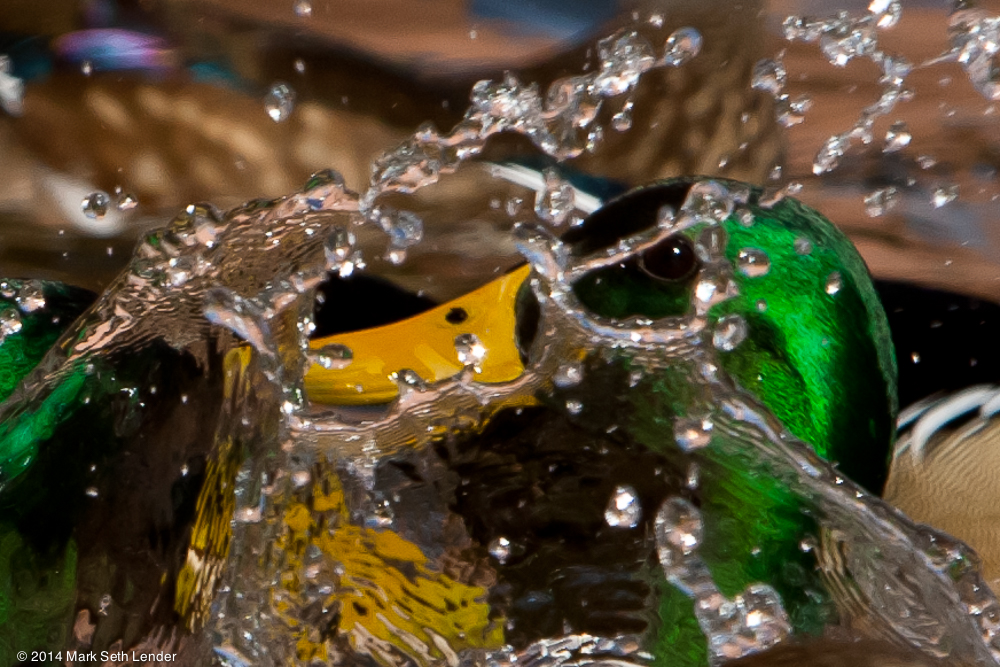
Mallards are gathering.  Hungry, complaining, up before sunrise and nothing in the belly. They stir the surface and wait. One calls. A loud descending voice like an old man railing against condition and age. The others mumble under their breath. Annoyed, querulous. Impatient for the food that has not arrived. Anxious for the giver to come yet mistrustful. A cry goes up and they fly a distance when they see him. Even though they know him.

They are wise not to trust.

Soon they will separate: Drakes to the one side, former fathers former sons molting together into winter iridescence (depending on the angle of view, night sky blue or brilliant green fire). Hens to the other side, former mothers former daughters drab in the brown that hides them but for that flash of purple deep as a welder’s arc and a final daub of white (almost hidden except when they take flight). Soon they will leave, these two drawn lots, on different days weeks apart but not toward a different route or result. They will be shot with equanimity all along the way, in great number, on their endless perilous journey seeking south.

But while they are here, I provide: I stand in place of the estuary that has been rerouted, water grass that was drowned, wild rice turned under, beaches walled off deep of the high tide mark and the sound of empty shells rolling in the back wash. I am the Source now, come stumbling and blurry as the cold ground fog laid down on the earth. I come every day. As if their lives depend on it.  As if my life depends on it.

And it does.  And it does.

For more Mallard photos click here